 £9.90Unit price£1.98 / 100g
-
£8.50Unit price£1.70 / 100g
-
£7.50Unit price£3.57 / 100g
-
£6.50Unit price£1.30 / 10ml
-
£10.90Unit price£2.18 / 100g
-
£9.90Unit price£1.98 / 100g
-
£9.90Unit price£1.98 / 100g
-
£9.90Unit price£2.48 / 100g
-
£9.70Unit price£1.94 / 100g
-
Acacia Honey with Honeycomb 500g
£9.90Unit price£1.98 / 100g -
£8.90Unit price£3.56 / 100g
-
£9.50Unit price£1.06 / 100g
-
£9.90Unit price£1.98 / 100g
-
£8.50Unit price£1.70 / 100g
-
£9.90Unit price£1.98 / 100g
-
Raw Honey with Sea Buckthorn 400g
£9.90Unit price£2.48 / 100g -
£5.90Unit price£2.36 / 100g
-
£6.50Unit price£2.60 / 100g
-
£6.50Unit price£2.60 / 100g
-
£7.50Unit price£2.14 / 100g
-
£8.50Unit price£1.70 / 100g
 Sold out£16.50Unit price£5.50 / 100g
-
£56.90Unit price£23.71 / kg
-
Acacia Honey in Ceramic Honey Pot 500g
£19.90Unit price£3.98 / 100g -
£30.00Unit price£30.00 / item




What Is Raw Honey?
Raw honey is honey harvested from the hive and bottled without pasteurisation or intensive processing. It is typically only coarsely filtered, allowing it to retain the natural aroma, texture and distinctive character of the flowers and landscape from which the bees collected nectar.
Our raw honey range brings together carefully sourced Hungarian honeys from the Great Hungarian Plain alongside a separate collection of certified organic honeys from the mountains and forests of Transylvania.
Raw Hungarian Honey from the Great Hungarian Plain
Most of our Monika’s Kitchen raw honey is produced by László Váraljai of Bivalyos Tanya, a family apiary near Ásotthalom on the Southern Great Hungarian Plain.
The surrounding landscape includes acacia woodland, meadows and natural water sources, providing varied seasonal forage for the bees and clear geographical provenance for the honey.
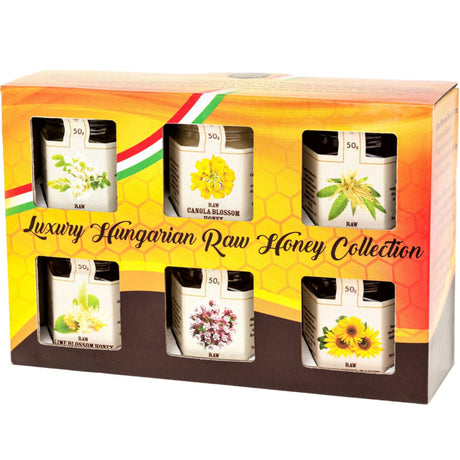
László produces a wide range of distinctive Hungarian honeys, including acacia honey, linden, chestnut, hawthorn, honeydew and other floral varieties, each reflecting a different source of nectar and its own characteristic flavour.
Personally Selected by Monika
László was one of the first producers founder Monika Gyenes began working with when Best of Hungary was established.
Monika visits László and his apiary each year to taste the new harvest, comparing the flavour, aroma and botanical character of the honeys before selecting them for the range. She also remains in regular contact with him throughout the season, giving Best of Hungary first-hand knowledge of the beekeeper, landscape and products we sell.
Their collaboration has expanded beyond traditional single-flower honeys. Monika has worked with László to develop speciality Monika’s Kitchen products including smoked honey, hot honey, truffle honey and honey created specifically for pairing with cheese, while keeping raw Hungarian honey at the heart of each recipe.
László’s work extends beyond honey itself to other products harvested from the hive. He also produces raw bee pollen and propolis tincture, while his Royal Jelly Honey combines soft-set flower honey with added royal jelly, raw propolis and bee pollen. Together, these products reflect the breadth of his beekeeping expertise and our long-standing relationship with the apiary.
Single Origin & Monofloral Honey
For customers who want to explore honey by provenance and floral source, our single origin honey collection brings together honeys that can be traced to a clearly identified beekeeper, apiary or region.
Many of these are also monofloral, or single-flower honeys, meaning that their character is shaped predominantly by one flowering plant. The collection includes László’s Hungarian acacia, linden, chestnut and hawthorn honeys alongside certified organic acacia and raspberry honey from Transylvania.
This makes it possible to compare how both place and botanical source influence the colour, aroma, sweetness, texture and flavour of raw honey.
Harvested Without Heating
An important part of László’s approach is the way the honey is extracted from the comb. He harvests on naturally warm days, when the honey flows readily from the frames, so he doesn't need to heat it just to make extraction easier.
The honey is then coarsely filtered and bottled without pasteurisation, helping preserve the natural character of each harvest.
What Is Pure Honey?
Pure honey is honey that has not been adulterated with added sugar syrups or other sweeteners. For us, provenance is one of the most important safeguards: we work directly with known producers and can trace our honeys back to the beekeeper and region where they were harvested.
Honey authenticity has become an important issue in the UK. In 2024, testing commissioned by Honey Authenticity Network UK examined 25 honeys from major retailers using a DNA-profiling method, with 24 samples flagged as suspicious.
The testing method itself has prompted debate within the honey industry, and no single analytical method is currently regarded as definitive for every form of honey adulteration. Nevertheless, the results highlight why clear provenance, direct producer relationships and independent testing are increasingly valuable when choosing honey.
Learn more about honey authenticity.
Independently Tested Hungarian Acacia Honey
The acacia honey produced by Bivalyos Tanya has been independently analysed by Quality Services International GmbH (QSI), a specialist honey-testing laboratory in Germany.
The tested Hungarian acacia honey complied with the requirements of the EU Honey Directive. Its fructose-to-glucose ratio of 1.60 is characteristic of acacia honey and helps explain its naturally fluid consistency and tendency to crystallise more slowly than many other varieties.
View the independent laboratory report for our Hungarian acacia honey.
Award-Winning Raw Honey
Several honeys in the Monika’s Kitchen range have received recognition at the Great Taste Awards by the Guild of Fine Food, providing independent assessment of their flavour and quality.
Great Taste-recognised varieties in the range include acacia, linden, chestnut, hawthorn, and other specialist Hungarian honeys.
View Best of Hungary’s Great Taste-recognised products in the official Guild of Fine Food directory.
Hungarian Acacia Honey
Acacia honey is one of Hungary’s most celebrated honey varieties and is officially recognised as a Hungaricum.
It is known for its pale golden colour, delicate floral flavour and naturally high fructose-to-glucose ratio, which helps it remain liquid for longer than many other honeys.
Raw Acacia Honeycomb
For one of the most direct ways to enjoy honey from the hive, explore our raw honeycomb collection.
All of our honeycomb is made from László’s acacia honey and is available as hand-cut comb, honeycomb immersed in golden acacia honey or a complete wooden honeycomb frame.
Certified Organic Honey from Transylvania
Alongside our Hungarian raw honeys, we offer a separate range of certified organic honey sourced from a family apiary and local network of beekeepers in Transylvania.
Monika selected this producer to extend the range with organic alternatives from the forests, meadows and mountain landscapes of the region, including organic acacia, mountain, pine and raspberry honey.
Best of Hungary is independently certified by Soil Association Certification for the handling, storage, importing and trade of organic products under licence DC30208.
Read more about our organic certification and product authenticity standards.
How Do Raw Honeys Differ?
The flavour, colour, and texture of raw honey vary depending on the plants the bees visit and the time of harvest.
- Acacia honey: light, floral and mild, with a naturally runny consistency.
- Linden honey: aromatic and herbal with a refreshing citrus character.
- Chestnut honey: darker, less sweet and more intense, with woody and nutty notes.
- Hawthorn honey: medium-sweet with floral, earthy and gently nutty flavours.
- Honeydew honey: deeper and more robust than many blossom honeys.
- Organic mountain and pine honeys: fuller, darker styles with stronger forest character.
How to Use Raw Honey
- Drizzle over porridge, yoghurt, granola or fresh fruit.
- Spread on toast, brioche or pancakes.
- Stir into tea, coffee or other drinks.
- Use in baking, marinades, glazes and salad dressings.
- Pair lighter honeys with soft cheese and stronger honeys with mature or blue cheese.
- Choose smoked, hot or truffle honey for more distinctive savoury dishes and cheese boards.
Why Does Raw Honey Crystallise?
Crystallisation is a natural process and does not mean the honey has spoiled. Different varieties crystallise at different rates, largely depending on their natural balance of glucose and fructose.
If you prefer your honey runny, place the closed jar in gently warm water and allow it to soften gradually. Avoid excessive heat, which can alter the honey’s natural aroma and character.
Buy Raw Honey Online in the UK
Explore our selection of raw Hungarian honey, organic honey and fresh honeycomb, from delicate acacia and fragrant linden to chestnut, hawthorn, honeydew and specialist gourmet varieties.